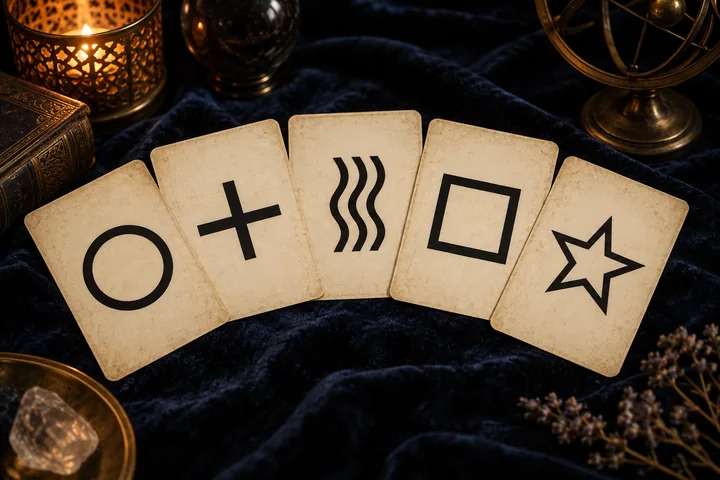
The ESP (Extrasensory Perception) test measures intuitive perception using traditional parapsychological methods. Based on research conducted by institutions like the Princeton Engineering Anomalies Research (PEAR) lab and the work of researchers like J.B. Rhine at Duke University, ESP tests use standardized methods to measure abilities that go beyond the five traditional senses. The test typically involves guessing which of several options a hidden target matches—colors, symbols, shapes, or numbers. While the scientific community remains divided on the validity of ESP, the test serves as a tool for exploring your own intuitive faculties and expanding your awareness of non-sensory perception.
Frequently Asked Questions
Is ESP scientifically proven?
The scientific community remains divided on ESP. Some researchers (like J.B. Rhine at Duke University and the PEAR lab at Princeton) have reported statistically significant results suggesting ESP may be real. However, many scientists criticize the methodology and reproducibility of these studies. The ESP test on this site is primarily a tool for self-exploration, not a scientific measurement.
How accurate is the ESP test?
The accuracy of the ESP test depends on your state of mind, practice, and natural ability. Taking the test multiple times provides a more accurate picture than a single session. Even if your results don't exceed chance, the test is valuable for exploring your intuitive faculties.
Can anyone develop ESP ability?
Many researchers believe that ESP ability exists in all people and can be developed with practice. Regular ESP testing, meditation, and mindfulness practice can enhance your intuitive perception. The test provides a structured way to explore and develop this ability.
Do I need any special ability to take this test?
No. The ESP test is designed for everyone. No special abilities, training, or spiritual experience are required. Just answer intuitively and see what your results reveal.