Astrology Tools
Explore our collection of free online tools in this category.
Natal Chart
Enter your birth date, time and city. Historical time offsets are applied automatically to calculate the Sun, Moon and Ascendant and show their saved interpretations.
Open
Ascendant Calculator
Calculate your ascendant from your birth date, time and city and explore its description, traits and advice.
Open
Moon Sign Calculator
Free moon sign calculator. Discover your lunar sign and its emotional influence on your personality.
Open
Sun Sign Calculator
Free sun sign calculator. Discover your zodiac sign and its core influence on your personality and life.
Open
Zodiac compatibility
Compare two signs in love, friendship and work. Explore symbolic affinity, examples and questions for conversation. Free, with no registration.
Open
Lunar calendar
Check Moon phases, illumination and upcoming new and full Moons. Browse the months and choose your time zone. Free, with no registration.
Open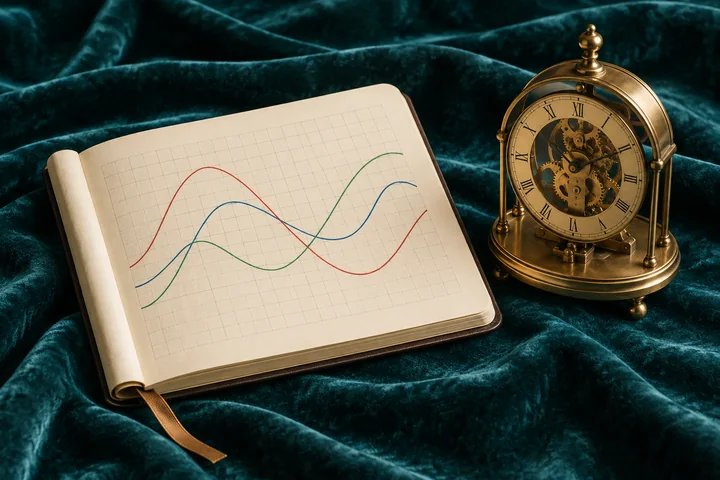
Biorhythm Calculator
The chart represents symbolic cycles of 23, 28 and 33 days from birth.
Open
Relationship synastry
Compare two birth charts: affinities, communication and points of friction between their planets.
Open
Your personal transits
See which planets activate your birth chart and their approximate active periods.
Open
Your solar return
Calculate the Sun’s return to its birth position and explore the themes of your new annual cycle.
Open
Composite Relationship Chart
A chart for the bond you create together: its tone, support and tensions.
Open
Planetary Hours
The Sun’s rhythm in your location, divided among seven traditional planets.
Open
Your Astrology World Map
Explore your birth’s planetary lines and their correspondences near a city.
Open
Retrograde Calendar
See which planets are retrograde and the dates of each change throughout the year.
Open
Lunar Return
The Moon’s next return to its natal position: a chart for your new lunar cycle.
Open
Secondary Progressions
One day for each year of life. Explore the symbolic movement of your Sun, Moon and personal planets.
Open
Your Year’s Theme · Profections
Explore your ages and the house, sign and ruler of each birthday-to-birthday period.
Open
Eclipses in Your Chart
Explore solar and lunar eclipses and their contacts with your birth chart.
Open
Compare Dates with Astrology
Compare two to five moments for a meeting, presentation or creative project.
Open
The Chart of Your Question
Ask about a relationship, a job application or a professional project. Explore its horary chart.
Open
Your Saturn Return
Explore your return dates, repeated crossings and the theme of this astrological stage.
Open
Your draconic chart
Compare your tropical positions with those measured from the north lunar node. Explore each planet and discover what changes and what stays the same.
Open
The sky at your birth
Explore the stars and planets above your birth horizon. Rotate the map, explore its constellations and download a keepsake of that moment.
Open
The Wheel of the Year
Explore eight celebrations of the seasonal cycle. Choose a year and hemisphere, check their dates and find a symbolic gesture for each stage.
Open
Your Human Design
Explore your type, profile and network of centers, gates and channels. A symbolic map calculated from your birth, with clear explanations of each part.
Open
Your Life Chapters · Zodiacal Releasing
Explore a timeline of chapters and subchapters from the Lot of Spirit. View their dates and symbolic themes for projects and life direction.
Open
Your Vedic chapters · Dashas
Explore your planetary periods, current subperiod and next transition.
Open
The Venus rose · Your eight-year cycle
Discover the pattern Venus traces around Earth and explore its meetings with the Sun.
Open
Your Navamsa chart · The D9 map
Explore your Vedic divisional chart beside the sidereal birth chart.
Open
Fixed stars in your birth chart
Discover zodiacal contacts between selected stars and your natal planets. Explore a clear map, exact distances and their symbolic reading.
Open