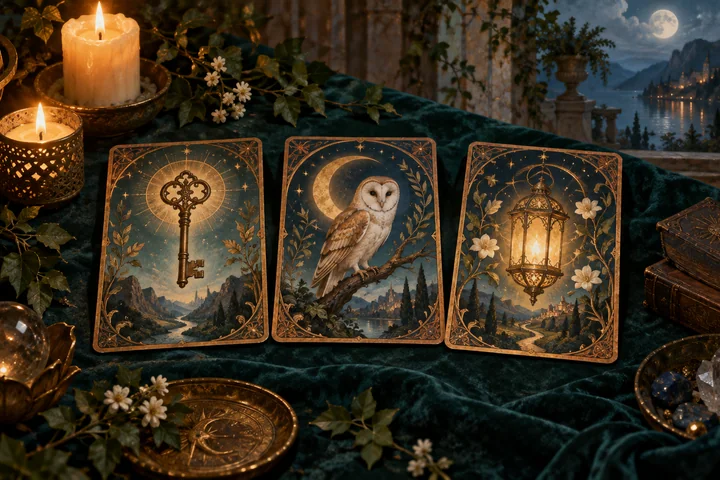
Ask, choose and connect. Discover the deck, its arrangement and an example of a complete reading.
The reading and its nuances
Lenormand symbols gain nuance when read together. One card may introduce a subject while another describes movement, tone or stability. Build a sentence between the three images before settling on an isolated keyword.
How this consultation works
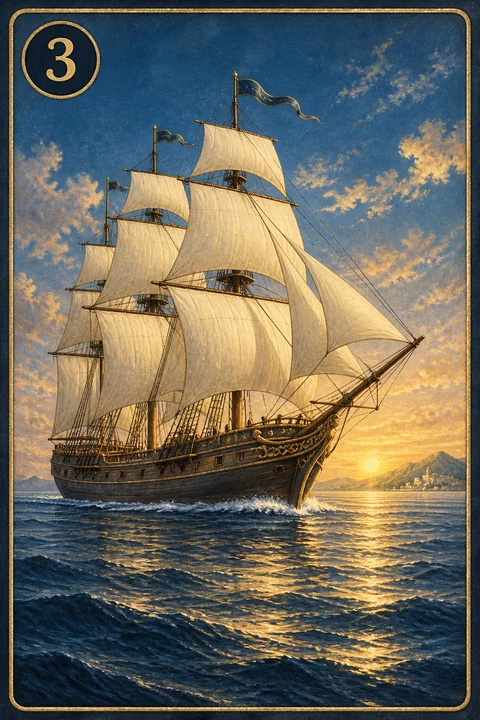
This application uses the 36 Lenormand cards, with symbols such as the Rider, Clover, Ship and House. AI interprets the three chosen cards in relation to your question. Enter a clear question and choose three of the facedown cards. Wait for the animation to finish and the reading to appear. Positions follow the order in which you choose the cards; they are not assigned past, present and future. The reading offers a symbolic interpretation to reflect on your question.
An example reading
With (1) The Rider, (27) The Letter and (35) The Anchor, one thread could be communication seeking continuity: movement, a message and a point of support. In a collaboration question, consider how contact might become a sustained exchange. The third card nuances the whole without fixing a date.
Frequently Asked Questions
Should I interpret every symbol separately?
Recognise each symbol, then connect them in the displayed order. The application's synthesis brings the three cards together around your question; the positions are not temporal.
How can I focus the consultation?
Choose one subject and a clear question. If the tool has no question field, keep it as a personal reference. Connect the symbol with a specific situation and note both what fits and what remains open.
Is retrying the same as starting a new consultation?
When Retry this reading appears, you can continue with the same question and selection. A new consultation allows another draw, and AI may write a different interpretation. The pauses and usage limits remain in place.
How can I connect the reading with real life?
Separate the symbol from what you know through experience. Use its contrast to ask a question or explore a possibility; examples illustrate a reading without certifying facts or fixing the future.
Can I keep the result and add notes?
Use Save reading once the result is complete. In My readings you can reopen it, add notes and download it as text. Data stays in this browser; use the library backup if you want to keep it when changing devices.